The Ten-Gallon Starter Tank
Ten gallons is the most popular tank size for beginners. It is also one of the most misunderstood. Here is how to set one up for success.
Sam Rivera
Sam has kept and bred bettas for twelve years and maintains a YouTube channel dedicated to betta care and genetics. He advocates for responsible betta keeping standards.
Ten gallons is the most popular tank size for beginners. It is affordable, fits on a desk or dresser, and seems like a manageable starting point. It is also one of the most commonly misused tank sizes in the hobby — overstocked, under-filtered, and populated with fish that have no business being in ten gallons.
Done right, a ten-gallon tank is a genuinely rewarding setup. Here is how to do it right.
What fits in ten gallons
The old "one inch of fish per gallon" rule is meaningless. A ten-inch fish does not belong in a ten-gallon tank regardless of the math. A better approach: research the adult size and behavior of every species you want to keep before you buy them.
Good choices for a ten-gallon: a single betta with snails or shrimp; a small school of nano fish (chili rasboras, ember tetras, celestial pearl danios) with a few corydoras; a pair of dwarf gouramis; a colony of endlers livebearers. Bad choices: goldfish (need 20+ gallons per fish), cichlids (most species), plecos (most grow to 12+ inches).
Filtration
A ten-gallon tank needs a filter rated for at least 40–50 gallons per hour — four to five times the tank volume. This sounds like overkill but accounts for the fact that filter ratings are optimistic and that biological filtration capacity matters more than flow rate. A sponge filter powered by an air pump is an excellent, low-cost option that provides both mechanical and biological filtration with gentle flow.
Heating
A 50-watt adjustable heater is appropriate for a ten-gallon tank in a typical home environment. Set it to the appropriate temperature for your fish and check it with a separate thermometer — heater thermostats are not always accurate.
Planting
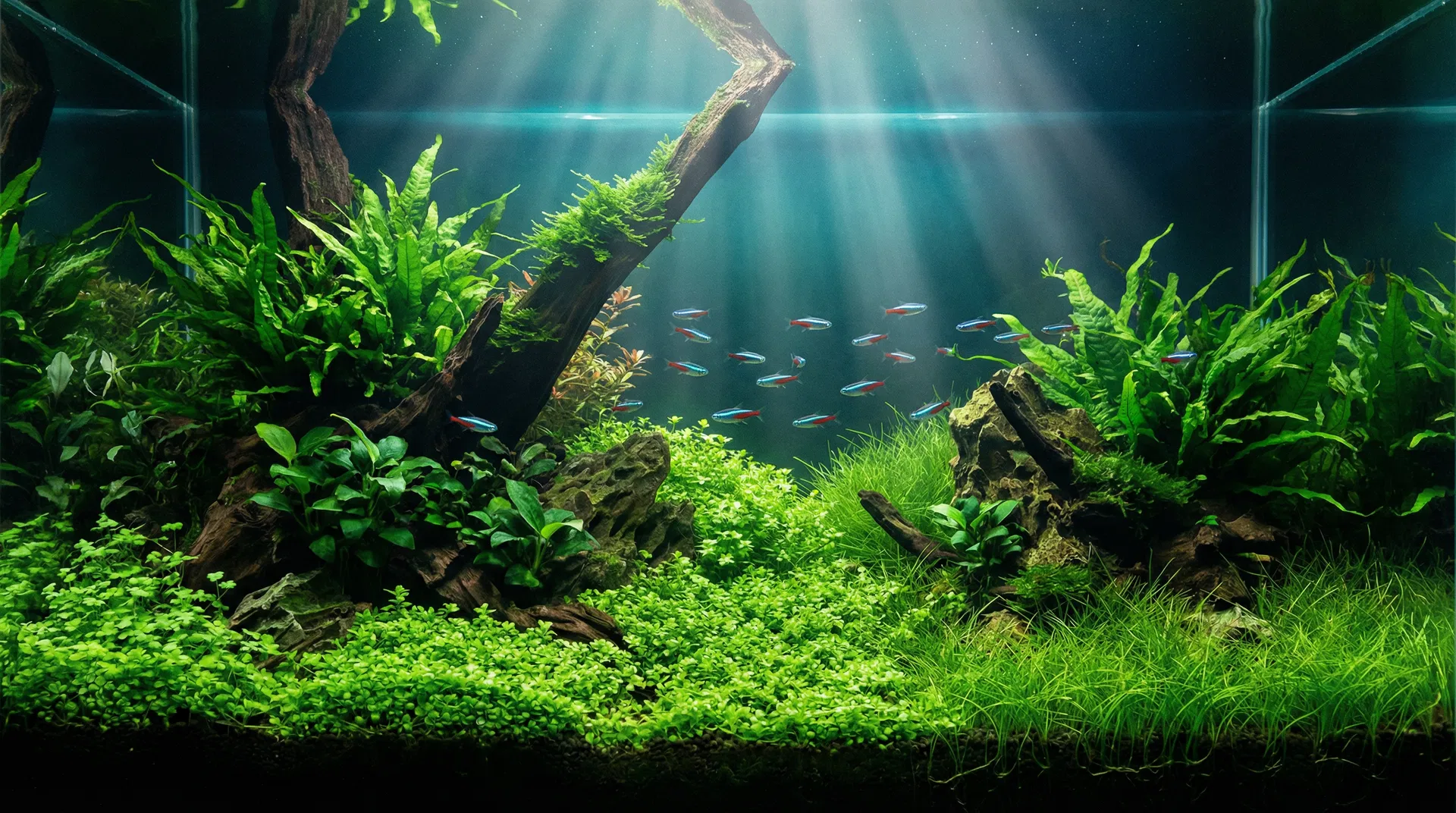
Live plants improve water quality, reduce algae, and make the tank look better. For a ten-gallon, low-light plants that don't require CO₂ are the practical choice: Java fern, Anubias, Java moss, hornwort, and Amazon sword (though the sword may outgrow a ten-gallon). Attach Java fern and Anubias to driftwood or rock rather than burying the rhizome — they will rot if planted in substrate.
A well-set-up ten-gallon tank is a complete ecosystem in miniature. It teaches you the fundamentals of water chemistry, filtration, and fish behavior in a manageable format. Master the ten-gallon and you will be well prepared for anything larger.
Track your water parameters with MudCap AquaJournal
Log pH, ammonia, nitrite, nitrate and more — then get AI insights when something looks off.
Start free at mudcapjournal.com →