Water Chemistry
Understanding the Nitrogen Cycle
The nitrogen cycle is the single most important concept in fishkeeping. Get it wrong and your fish suffer. Get it right and everything else becomes manageable.
Dr. Priya Nair
March 31, 2026·7 min read
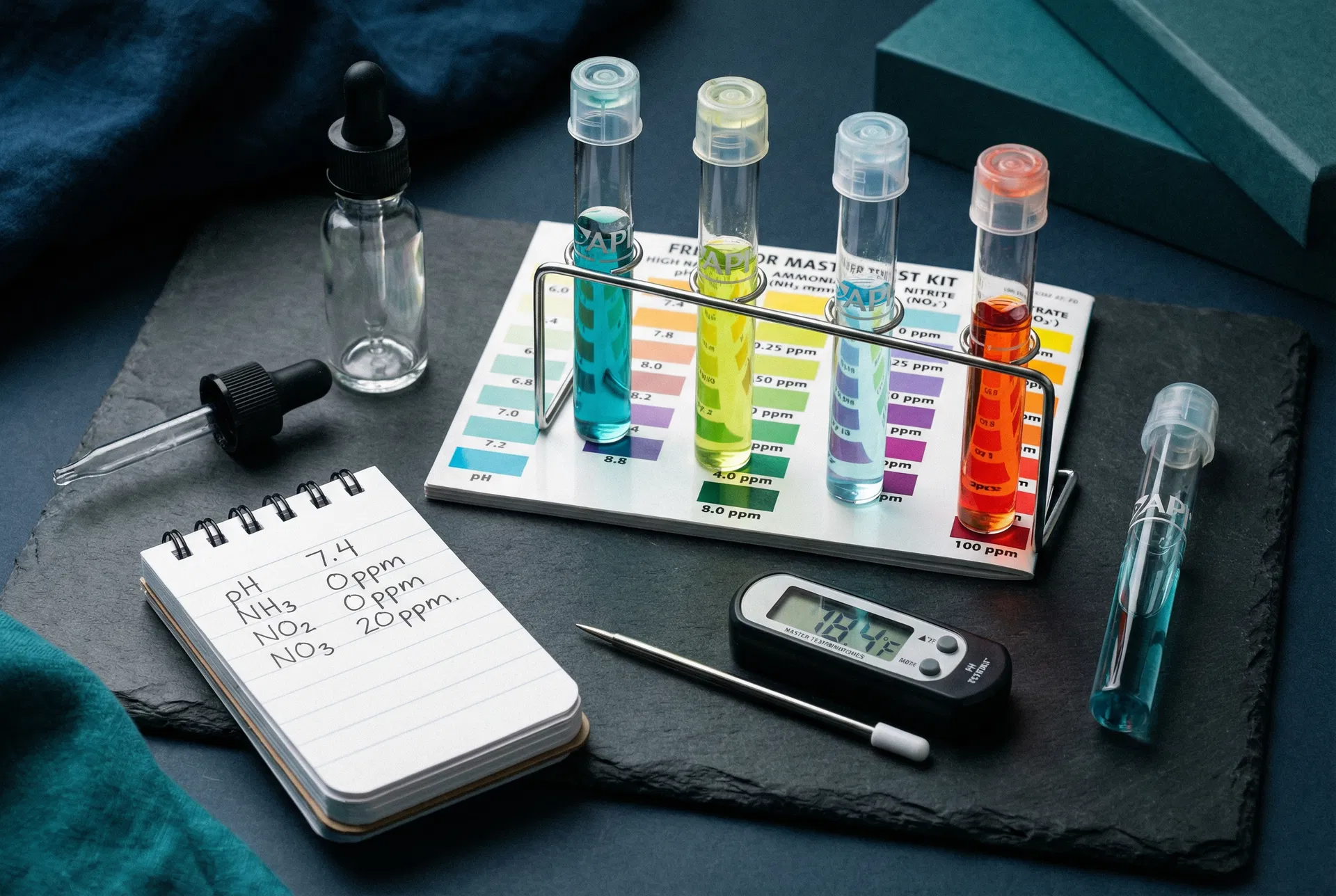
A test kit is only useful if you know what the numbers mean. Here is a plain-language guide to the parameters that matter most.
Dr. Priya Nair
Dr. Priya Nair holds a PhD in aquatic biology and has kept freshwater and marine aquariums for over 20 years. She writes about water chemistry and fish health.
A test kit is only useful if you know what the numbers mean. Most fishkeepers learn to test their water but struggle to interpret the results — or worse, test infrequently and only after something has gone wrong. Here is a plain-language guide to the parameters that matter most and what to do when they are out of range.
pH measures the acidity or alkalinity of your water on a scale of 0–14, with 7 being neutral. Most freshwater fish thrive between 6.5 and 7.5. The specific ideal range depends on the species — African cichlids prefer 7.8–8.5, while soft-water fish like discus do best at 6.0–6.8. Sudden pH swings are more dangerous than a pH that is slightly outside the ideal range. Stability matters more than perfection.
Ammonia should always read zero in an established, cycled tank. Any detectable ammonia is a problem. Sources include: too many fish, overfeeding, a dead fish you haven't found yet, a disrupted bacterial colony (after cleaning the filter too aggressively or using tap water with chloramine). Response: immediate partial water change, identify and remove the source, and test daily until levels return to zero.
Like ammonia, nitrite should always read zero in a cycled tank. Elevated nitrite indicates the cycle is incomplete or has been disrupted. Response: same as ammonia — water change, identify the cause, test daily.
Nitrate is the end product of the nitrogen cycle and accumulates over time. Unlike ammonia and nitrite, low levels are not immediately toxic, but chronic high nitrate (above 40 ppm for most fish, above 20 ppm for sensitive species and corals) stresses fish, suppresses immune function, and promotes algae growth. The primary control is regular water changes. In planted tanks, plants consume nitrate and can keep levels very low.
The most valuable thing you can do with your test results is write them down. A log of water parameters over time tells you how your tank behaves — how quickly nitrate accumulates, how stable your pH is, how the tank responds to changes in feeding or stocking. MudCap AquaJournal was built for exactly this purpose: quick logging, trend visualization, and alerts when parameters drift out of your target range.
Test regularly. Log everything. The data will tell you what your tank needs before the fish do.
Track your water parameters with MudCap AquaJournal
Log pH, ammonia, nitrite, nitrate and more — then get AI insights when something looks off.
Start free at mudcapjournal.com →The nitrogen cycle is the single most important concept in fishkeeping. Get it wrong and your fish suffer. Get it right and everything else becomes manageable.