Betta Fish: Beyond the Myth
Betta fish are sold in tiny cups and kept in vases. Neither is appropriate. Here is what a betta actually needs to thrive.
Sam Rivera
Sam has kept and bred bettas for twelve years and maintains a YouTube channel dedicated to betta care and genetics. He advocates for responsible betta keeping standards.
Betta fish are among the most widely sold and most widely mistreated fish in the hobby. They are sold in tiny cups, displayed in unheated vases, and kept in conditions that would be considered cruel for any other vertebrate. The myth that bettas thrive in small, unfiltered containers persists because bettas are extraordinarily hardy — they can survive conditions that would kill most fish. Survival is not the same as thriving.
The minimum setup
A betta needs a minimum of five gallons of heated, filtered water. Ten gallons is better. The water temperature should be maintained between 76°F and 82°F (24–28°C) — bettas are tropical fish and will become lethargic, lose color, and develop immune problems in cold water. A gentle filter is essential for water quality, but the flow should be low — bettas have long, heavy fins and struggle in strong current.
Water parameters
Bettas prefer slightly soft, slightly acidic water: pH 6.5–7.5, hardness 2–12 dGH. They are more tolerant of parameter variation than many fish, but they still require a cycled tank with zero ammonia and nitrite. Nitrate should be kept below 20 ppm with regular water changes.
Feeding
Bettas are carnivores. Their diet should be based on high-quality betta pellets supplemented with frozen or freeze-dried foods: bloodworms, daphnia, brine shrimp. Feed small amounts once or twice daily. Overfeeding is a common mistake — a betta's stomach is roughly the size of its eye. Uneaten food fouls the water quickly in a small tank.
Tank mates
Male bettas cannot be kept with other male bettas — they will fight, often to the death. They can, in a sufficiently large tank with adequate hiding places, coexist with peaceful community fish: corydoras catfish, small tetras, snails, and some shrimp species. Female bettas can sometimes be kept in groups (a "sorority"), but this requires careful monitoring and a tank of at least 20 gallons with dense planting.
The personality
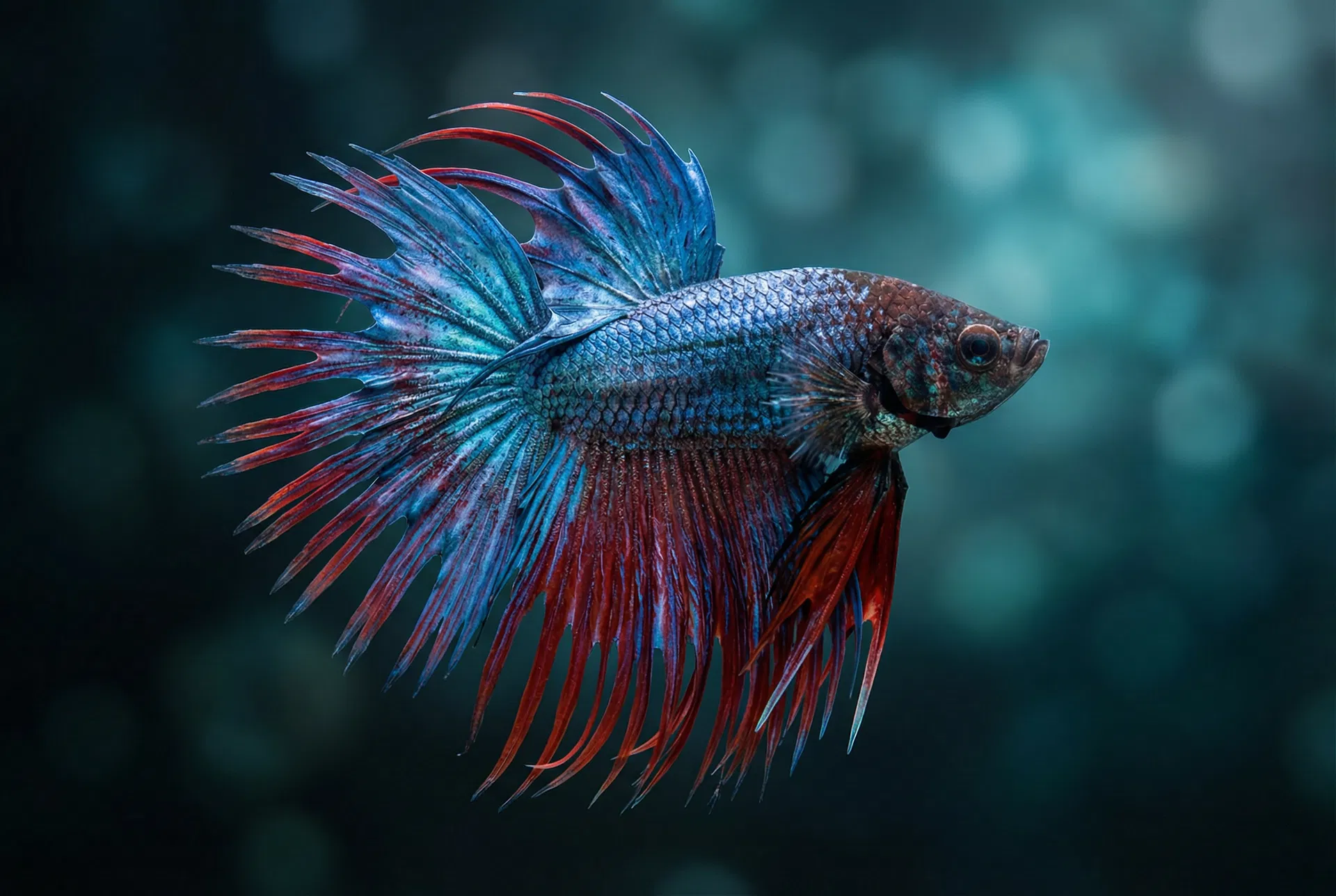
What makes bettas worth the effort is their personality. They are intelligent, curious fish that recognize their keepers, respond to feeding time with genuine enthusiasm, and — given a proper environment — display the full range of their extraordinary coloration. A healthy betta in a well-planted tank is one of the most beautiful sights in freshwater fishkeeping.
Track your water parameters with MudCap AquaJournal
Log pH, ammonia, nitrite, nitrate and more — then get AI insights when something looks off.
Start free at mudcapjournal.com →